Research programme

Pathogen populations in their ecological and public-health context.

We study how bacterial variation, transmission and ecology combine to shape infection, antimicrobial resistance and disease outcomes.

01

Working premise

The genome is not the whole story—but it is a powerful record of one.

Genome sequences retain signals of ancestry, recombination, host association, antimicrobial selection and movement between populations. Those signals become genuinely useful when they are connected to good sampling, clinical and ecological metadata, and local knowledge.

Our programme therefore moves repeatedly between scales: from nucleotide changes to lineages, from lineages to host communities, and from surveillance datasets to intervention choices.

Core approaches

Population genomicsPangenomesPhylogeneticsMachine learningSource attributionMetagenomicsAMR genomicsOne Health sampling
1.1

Global pathogen genomics

Filling the gaps in where and whom we sequence.

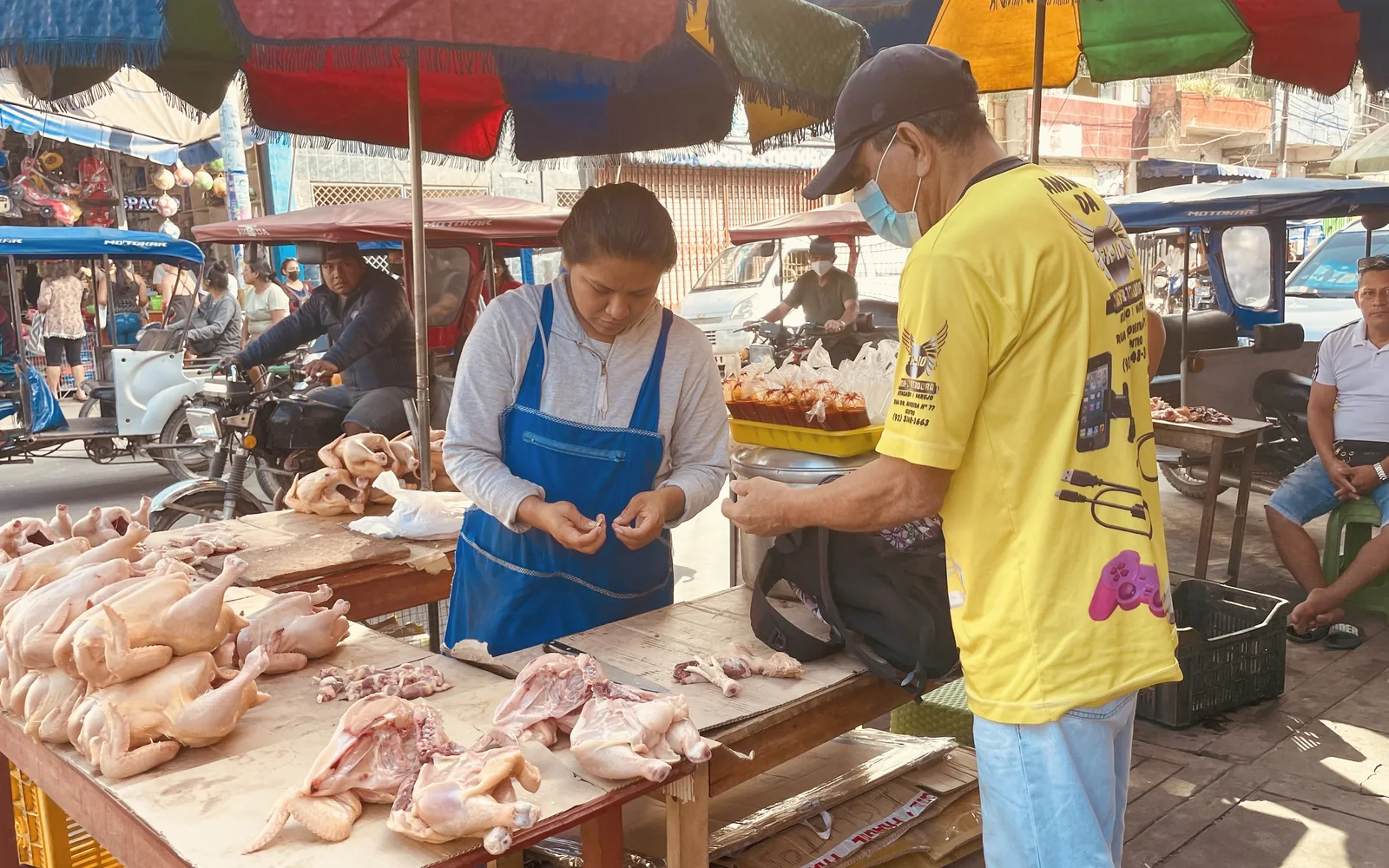
Enteric disease is often most severe where genomic surveillance is least complete. We work with collaborators in South America, West Africa and Southeast Asia to build datasets that represent local epidemiology rather than treating established collections from Europe and North America as universal.

The objective is not simply to generate more sequences. It is to ask locally relevant questions about persistent infection, asymptomatic carriage, mixed exposure, seasonal transmission and the role of food, animals, water and household environments.

Questions

  • Which bacterial populations circulate locally?
  • How do symptomatic and asymptomatic infections differ?
  • Which reservoirs contribute most to exposure?
  • How can surveillance capacity remain locally useful after a project ends?
1.2

Evolution and spread of AMR

Resistance as a population and ecosystem process.

Antimicrobial resistance is produced by selection, but its distribution is shaped by population structure, recombination, mobile genetic elements and contact between ecological niches. We investigate these processes in Campylobacter, Salmonella, staphylococci and other clinically important bacteria.

A recurring focus is the movement of resistance determinants through livestock systems and food chains, including the genomic backgrounds that enable resistance to persist. This work links specific mechanisms—such as target mutations, efflux systems or plasmids—to the lineages and production systems in which they spread.

Why population context matters

The same resistance determinant can have very different public-health consequences depending on the lineage carrying it, its ecological range, its fitness costs and the connectivity of the host population.

1.3

One Health and source attribution

Moving from “present in animals” to quantitative transmission evidence.

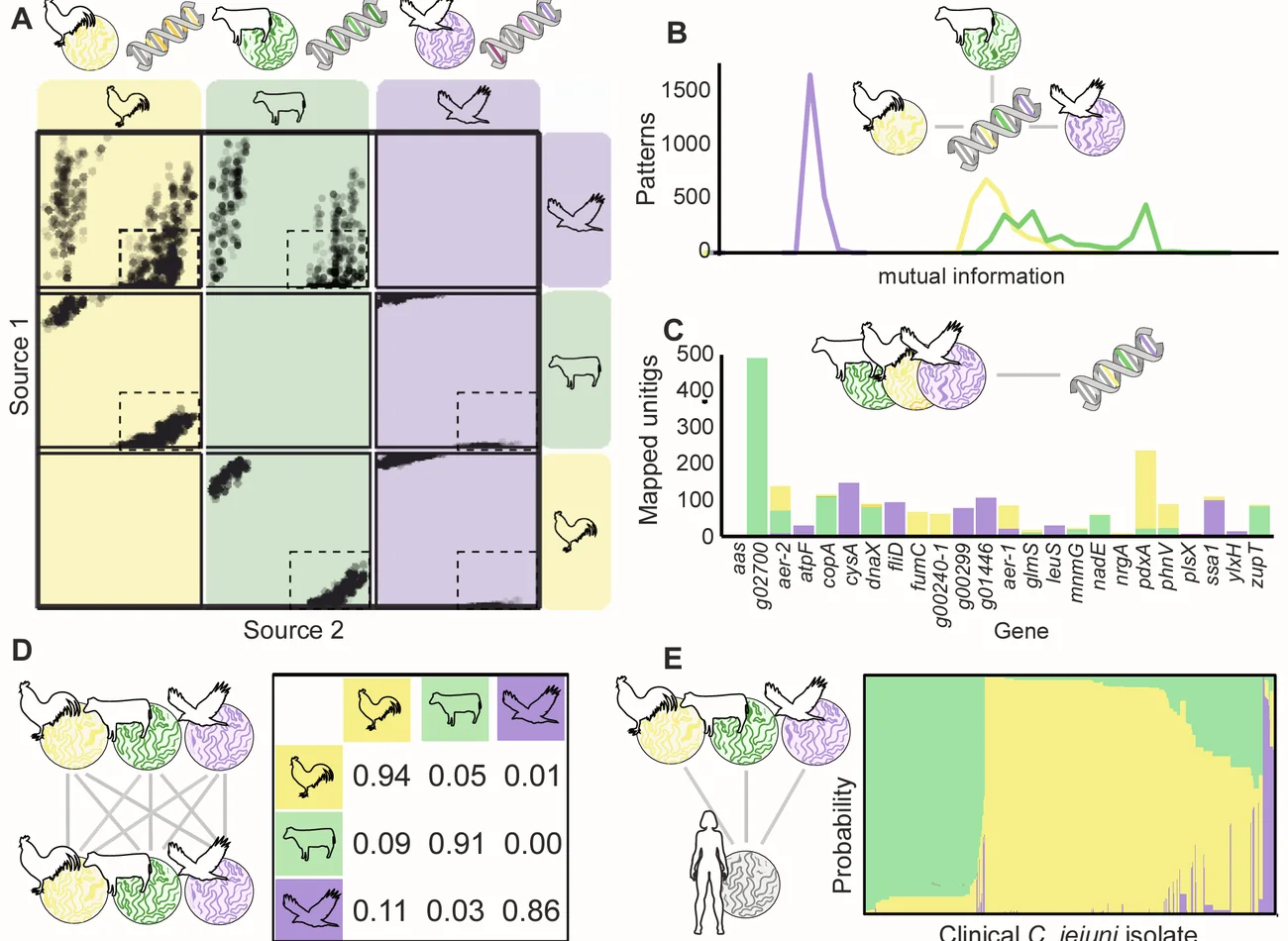
Many bacterial pathogens circulate across people, livestock, wildlife, food and environmental reservoirs. Genomic source attribution helps estimate the relative contribution of those reservoirs to human disease, while carefully designed field studies reveal the pathways through which exposure occurs.

We develop and evaluate machine-learning and probabilistic models, paying particular attention to population structure, uneven sampling and the need to quantify uncertainty. The purpose is not a single permanent percentage, but a surveillance framework that can detect changes and support targeted control.

Example

US Campylobacter source attribution

Analysis of 8,856 human and 16,703 source genomes estimated poultry as the dominant source, with cattle making the next-largest contribution.

Read the story →
1.4

Disease outcomes and carriage

Understanding why infection does not always look the same.

Pathogens can cause acute disease, prolonged carriage, recurrent infection or no obvious symptoms. We use genomic and epidemiological data to investigate whether these outcomes reflect bacterial lineage, host context, exposure intensity, mixed infection or interactions with the wider microbiome.

Current interests include persistent Campylobacter infection and childhood growth, lineage-specific disease associations, severe or unusual presentations, and the possibility of identifying genomic markers that improve risk stratification.

From association to explanation

Genomic association is a starting point. Stronger inference comes from combining population controls, functional interpretation, longitudinal data and experimental follow-up.

1.5

Methods and capacity

Tools should travel—and remain usable.

Reproducible workflows

Version-controlled pipelines for assembly, annotation, pangenomes, phylogenetics, AMR and source attribution.

Portable sequencing

Combining central high-throughput sequencing with approaches that strengthen local and regional analytical capacity.

Population annotation

Stable genomic nomenclature and linked metadata that make surveillance interpretable across time and place.